
About The Society
The Society represents residents and supporters of one of Brighton’s most distinguished historic estates. Its purpose is to protect and enhance the architectural and cultural heritage of the area, while safeguarding its Grade I listed status as one of the UK’s most important Regency conservation areas.
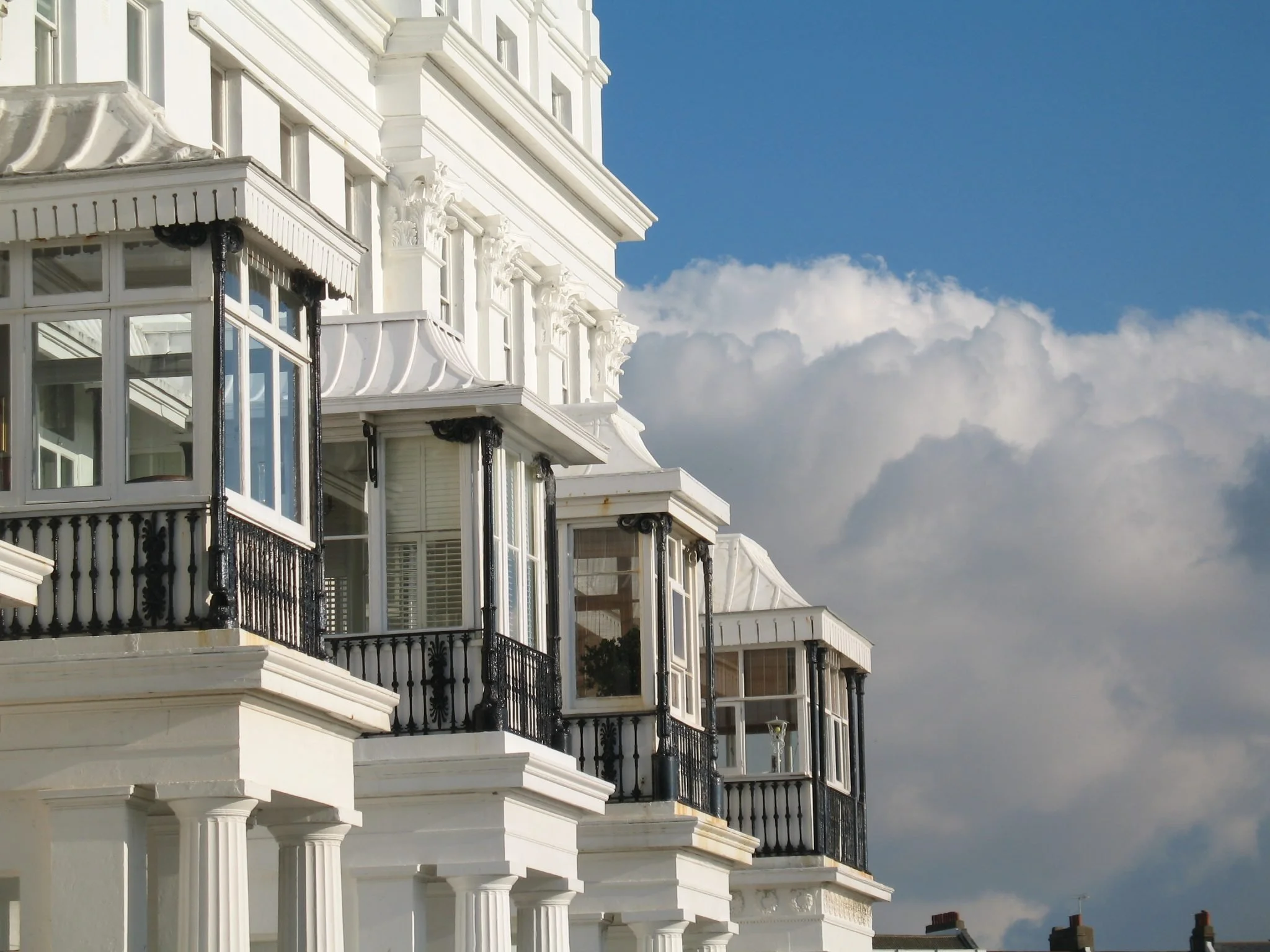
Centred around the elegant terraces of Sussex Square and Lewes Crescent, and the six acres of private gardens known as the Enclosures, the Estate is remarkable both in scale and design. Built in the early nineteenth century by the Revd. Thomas Read Kemp and architects Charles Busby and Amon Wilds, it remains one of the finest examples of Regency town planning in Britain.
In more detail
The Society is made up of residents of the Estate and members of the wider community who share a commitment to preserving and enhancing this remarkable place. Together, we work to protect the architectural heritage of the Estate and uphold its Grade I listed status as one of the UK’s leading Regency residential conservation areas, designated under Section 227 of the Town and Country Planning Act 1971.
Our long-term goal is to firmly establish the Estate and its Enclosures, the six acres of gardens around which the Estate was designed, as a nationally important architectural heritage site.
The Estate includes Sussex Square, Lewes Crescent, and the adjoining Arundel and Chichester Terraces. In scale alone, it is remarkable. The area covers more ground than Grosvenor Square in London, and Lewes Crescent is the largest residential crescent in Europe, even exceeding the diameter of Bath’s famous Royal Crescent.
Architecturally, the Estate shares the same Regency style seen in Belgravia and Pimlico. Its commanding position overlooking the English Channel helped shape Brighton’s long-standing reputation as “London by the Sea.”
The original estate was planned in 1825 by the Revd. Thomas Read Kemp, with architects Charles Busby and Amon Wilds. By 1828, the scheme had been scaled back to 106 houses. During this time, many properties were purchased by Thomas Cubitt, the celebrated builder behind Belgravia and Pimlico, after Kemp encountered financial difficulties. This was well before the railway reached Brighton in 1844, when sea bathing was still a fashionable novelty.
Our Mission
The Society exists to represent its members and to uphold the founding vision of Kemp, Busby and Wilds.
We act as a voice for residents on issues that affect the character and conservation of the Estate. When necessary, we challenge decisions that may harm its architectural integrity or historic significance.
At the same time, the Society encourages a strong community spirit. We organise social gatherings, talks and events that bring residents together. Many of these events are also open to others living within the Estate and the surrounding area.
Chairman & Committee
The Chairman and Committee represent the Society and speak on behalf of its members. They monitor planning proposals, developments and policy changes that could affect the Estate.
Particular attention is given to:
New developments within sight lines of the Estate
Projects near Brighton Marina
Planning applications for alterations to individual houses and flats
The Committee regularly engages with ward councillors, council officers and planning committees. The aim is simple. To ensure that decision makers understand the collective concerns and views of residents.
When proposals threaten the architectural unity or historic character of the Estate, the Society will challenge them.
This work has become increasingly important as pressures on public services, maintenance of public spaces and the quality of building materials continue to affect historic environments.
Annual General Meeting
The Society holds its Annual General Meeting each spring, usually in April. At this meeting, the Treasurer presents the Charity’s financial report, and members are updated on the Society’s activities and priorities.
CHarity Mission
The Kemp Town Society’s formal charitable purpose is to:
Monitor proposals for alterations and development within the Kemp Town Conservation Area
Raise comments or objections with the appropriate authorities where necessary
Campaign against inappropriate development within the area
Liaise with heritage organisations and similar associations
Inform members about matters of conservation interest
Conduct fundraising activities in support of these aims
Help protect what makes Kemp Town exceptional—today and for future generations.